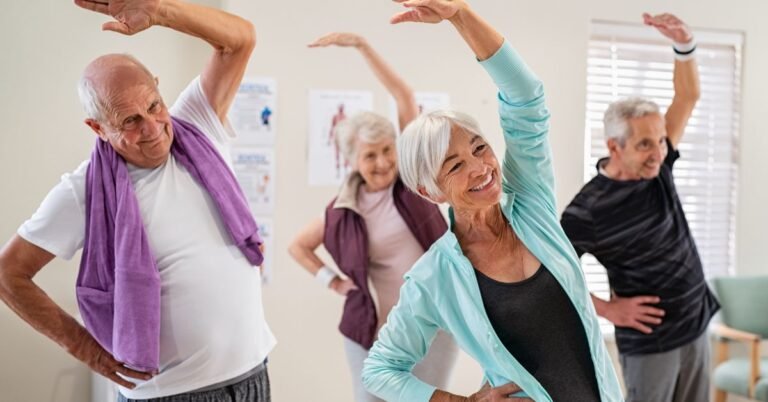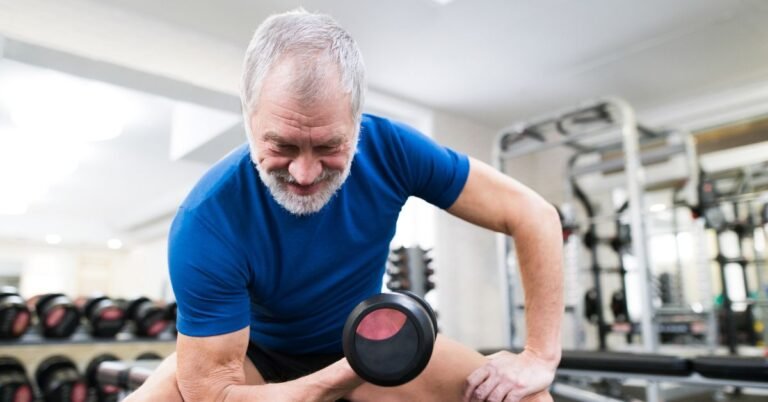
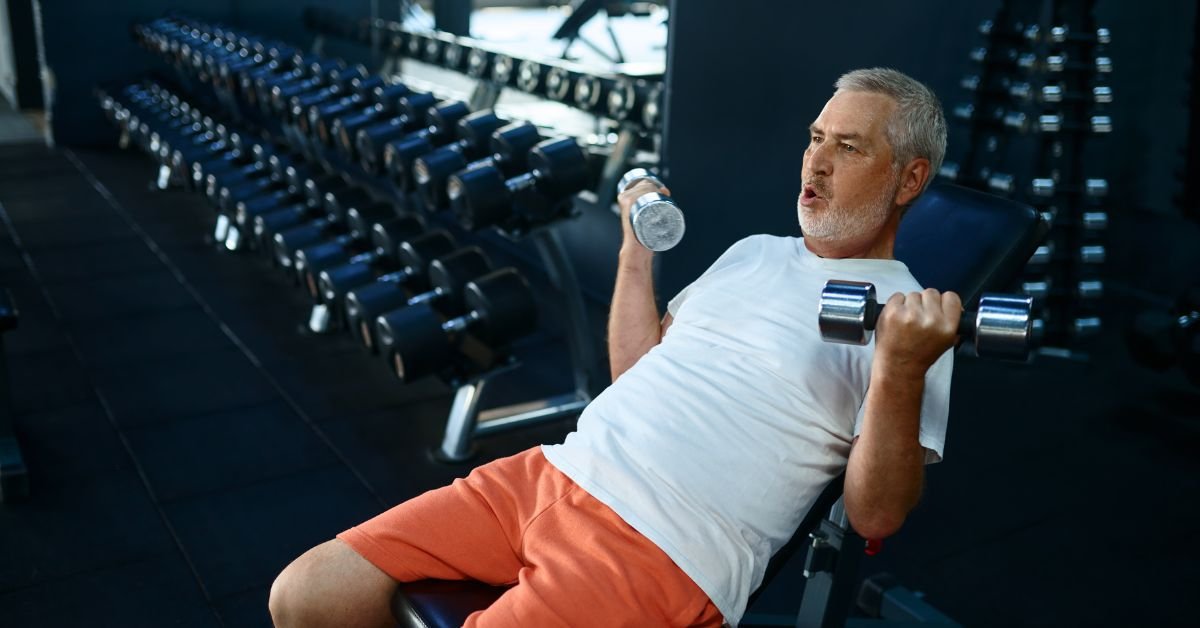
Like it or not, a number of changes happen to our bodies as we age. They are a natural part of living life and include a combination of age-related structural, biochemical and physiological changes.
Some of these changes are inevitable, however how we live our lives, including how much activity and exercise we do, has a huge influence on the speed and extent of these changes.
We all know exercise is good for us and has lots of benefits to our health. Perhaps less well known are the benefits of strength training (resistance training), which are fortunately now becoming more widely researched and promoted.
Perhaps even less well known are the benefits of strength training specifically for older adults. Strength training has multiple health and lifestyle benefits for older adults. So much so that in our opinion, it should be a mandatory prescription from your doctor. Let’s explore why…
What we’ll cover:
What happens to our bodies when we age?
- We lose muscle mass & muscle strength (sarcopenia)
- We lose bone density (osteopenia)
- The heart and blood vessels thicken making it harder to pump around a sufficient amount of oxygen and glucose to our cells
- Our kidneys don’t function as well to carefully concentrate our urine and keep the levels of electrolytes and chemicals in our blood at an optimum level
- Our ability to metabolise glucose effectively reduces and we start to carry more body fat
- We lose brain mass and the speedy connections which send messages between cells start to slow down
All of the changes above can have huge consequences. Some are inevitable with ageing, others have environmental and genetic risk factors which also play a role. The changes in our muscles and bones cause slowing down, aches and pains, making performing our normal daily activities such as walking, climbing stairs and household tasks more difficult.
It also puts you at an increased risk of falling over, and of serious injury such as fractures if you do. Ultimately, older adults with low muscle mass and bone density are at a higher risk of a poor quality of life, loss of independence and even an earlier death.1
The levels of muscle mass and strength loss varies in different people. Generally we are at our peak maximum physical capacity between 20-30 years old. Our muscle mass then starts to gradually decline until we are about 50 years old, after which the decline starts to happen more rapidly.
Studies have shown that strength loss can occur as fast as 15% per decade after our 50s.2 Though, the level of loss and rate of decline varies in different people because of a variety of factors including lifestyle, genetics and the presence of other conditions or diseases.
Is age-related decline inevitable?
Not all of the changes listed above are inevitable with ageing. There is evidence to show that a large amount of the decline in muscle strength seen in ageing is due to inactivity and disuse.3 A number of other studies now show that these changes can actually be reversed too.
We therefore can take ownership and control of our bodies in ageing. We can slow these changes down, we can reduce the loss of muscle and bone density and even improve it as we age.
Unfortunately, there is no magic medication, but there is something you can do in exercise and, more specifically, strength training. It just involves a little more effort than taking a pill every morning. That being said, strength training can also actually be more enjoyable and has many more benefits than just improving your muscle mass or bone density.
What are the benefits of strength training for older adults?
There is very clear evidence for the benefits of strength training in older adults to improve muscle strength, mass and functioning, as well as increase bone density.
It makes your muscles stronger, more powerful, and, keeps them doing their very important job in allowing you to do all the functional things you want to do in your life: walking around pain free to go to the shops and see friends, looking after your children and grandchildren, going on long bike rides and country walks, playing sports or even running marathons.
However the benefits are actually much more extensive than this! In older adults regular strength training has been shown to:
- Increase muscle mass and strength 45
- Increase bone density 6
- Improve cardiovascular health and reduce risk of all-cause mortality 7
- Improve brain health 89
- Increase quality of life, functional abilities and levels of independence 1011
- Reduce risk of falls, and therefore fractures and injuries 12
- Improve sleep quality 13
- Decrease levels of depression and anxiety 14
- Reduce pain from osteoarthritis 15
- Reduce the risk of a number of age-related diseases (including heart disease, type 2 diabetes) 16
- Lower risk of cognitive decline and dementia 17
Getting started
Starting strength training as an older adult can sound like a scary prospect, but it doesn’t have to be.
You don’t need to do it at the gym with heavy weights (though you absolutely can do), it can be something carried out in your home with little or no equipment.
Try our free 6 week beginners programme, browse our website to learn more, or get in touch for personalised 1:1 coaching.
Learn more: The Ultimate Guide to Strength Training For Older Adults
References
- Sharples, A. P., Hughes, D. C., Deane, C. S., Saini, A., Selman, C., & Stewart, C. E. (2015). Longevity and skeletal muscle mass: the role of IGF signalling, the sirtuins, dietary restriction and protein intake. Aging cell, 14(4), 511–523. https://doi.org/10.1111/acel.12342
- Keller, K., & Engelhardt, M. (2014). Strength and muscle mass loss with aging process. Age and strength loss. Muscles, ligaments and tendons journal, 3(4), 346–350.
- Bell, K. E., von Allmen, M. T., Devries, M. C., & Phillips, S. M. (2016). Muscle Disuse as a Pivotal Problem in Sarcopenia-related Muscle Loss and Dysfunction. The Journal of frailty & aging, 5(1), 33–41. https://doi.org/10.14283/jfa.2016.78
- Peterson, M. D., Rhea, M. R., Sen, A., & Gordon, P. M. (2010). Resistance exercise for muscular strength in older adults: a meta-analysis. Ageing research reviews, 9(3), 226–237. https://doi.org/10.1016/j.arr.2010.03.004
- Radaelli, R., Rech, A., Molinari, T. et al. Effects of Resistance Training Volume on Physical Function, Lean Body Mass and Lower-Body Muscle Hypertrophy and Strength in Older Adults: A Systematic Review and Network Meta-analysis of 151 Randomised Trials. Sports Med 55, 167–192 (2025). https://doi.org/10.1007/s40279-024-02123-z
- Hejazi, K., Askari, R., & Hofmeister, M. (2022). Effects of physical exercise on bone mineral density in older postmenopausal women: a systematic review and meta-analysis of randomized controlled trials. Archives of osteoporosis, 17(1), 102. https://doi.org/10.1007/s11657-022-01140-7
- Paluch, A. E., et al.; American Heart Association (2024). Resistance Exercise and Cardiovascular Health: Scientific Statement. Circulation.
- Jiang, W., Wang, X., Mao, L. (2025). Effects of resistance exercise on cognitive function, neurotrophic factors, brain structure, and brain function in older adults: A narrative review. Journal of Alzheimer’s Disease.
- Kušleikienė, S., Ziv, G., Vints, W. A. J., et al. (2025). Cognitive gains and cortical thickness changes after 12 weeks of resistance training in older adults with low and high risk of mild cognitive impairment: Findings from a randomized controlled trial. Brain Research Bulletin, 222, 111249. https://doi.org/10.1016/j.brainresbull.2025.111249
- Fernandes, L., Antunes, R., Matos, R., Monteiro, D., Amaro, N., Couto, N., & Jacinto, M. (2025). Effects of Strength Training on the Quality of Life of Older Adults with Sarcopenia: A Systematic Review of Randomized Controlled Trials. Journal of Ageing and Longevity, 5(4), 49. https://doi.org/10.3390/jal5040049
- Kirk, A., Steele, J., & Fisher, J. P. (2024). Machine-Based Resistance Training Improves Functional Capacity in Older Adults: A Systematic Review and Meta-Analysis. Journal of Functional Morphology and Kinesiology, 9(4), 239. https://doi.org/10.3390/jfmk9040239
- Sherrington, C., et al. (2025). Exercise interventions to prevent falls in older adults: network meta-analysis. European Review of Aging and Physical Activity; and: [Authors] (2025). Multimodal strength-balance programmes and fall prevention in older adults. Life.
- Bahalayothin P, Nagaviroj K, Anothaisintawee T. Impact of different types of physical exercise on sleep quality in older population with insomnia: a systematic review and network meta-analysis of randomised controlled trials. Family Medicine and Community Health. 2025;13:e003056. https://doi.org/10.1136/fmch-2024-003056
- Cunha, P. M., Werneck, A. O., Santos, L. D., Oliveira, M. D., Zou, L., Schuch, F. B., & Cyrino, E. S. (2024). Can resistance training improve mental health outcomes in older adults? A systematic review and meta-analysis of randomized controlled trials. Psychiatry research, 333, 115746. https://doi.org/10.1016/j.psychres.2024.115746
- Lim, J., Choi, A., & Kim, B. (2024). The Effects of Resistance Training on Pain, Strength, and Function in Osteoarthritis: Systematic Review and Meta-Analysis. Journal of personalized medicine, 14(12), 1130. https://doi.org/10.3390/jpm14121130
- Shiroma, E. J., Cook, N. R., Manson, J. E., Moorthy, M. V., Buring, J. E., Rimm, E. B., & Lee, I. M. (2017). Strength Training and the Risk of Type 2 Diabetes and Cardiovascular Disease. Medicine and science in sports and exercise, 49(1), 40–46. https://doi.org/10.1249/MSS.0000000000001063
- Nicola, L., Loo, S. J. Q., Lyon, G., Turknett, J., & Wood, T. R. (2024). Does resistance training in older adults lead to structural brain changes associated with a lower risk of Alzheimer’s dementia? A narrative review. Ageing research reviews, 98, 102356. https://doi.org/10.1016/j.arr.2024.102356